
Somewhere between the third missed workout and the moment you start avoiding stairs, knee pain stops being an inconvenience and starts running your schedule. We hear some version of that story every week at Sekiwala Pain Management Center, and it’s usually followed by the same frustration: months of rest, ice, and over-the-counter pills that dulled the ache without ever answering what actually caused it. As a knee pain specialist in Beverly Hills, CA, we’re built to answer that question instead of managing around it.
Knees are mechanically complicated. Although cartilage deteriorates differently from a ligament tear, and a meniscus injury is not like early arthritis, they can all cause almost the same kind of pain on the surface. Guessing wrong wastes months. That’s why every evaluation here begins with a real look at the joint itself: imaging when it’s warranted, a hands-on exam that tests range of motion and stability, and questions about when the pain flares that a rushed ten-minute visit rarely covers.
Patients searching for a knee pain specialist in Orange County, CA, often tell us the same thing after their first appointment here: nobody had actually explained what was happening inside their knee before. That gap is exactly what we work to close.
Dr. Edwin Kulubya has run this clinic since 2015, and his approach to joint pain reflects two decades of specialized training most patients never think to ask about. He’s board-certified in anesthesiology with a focused specialty in interventional pain management, a field that requires precision most general practitioners simply don’t practice day to day.
What that means for you in practical terms: If your knee is swollen, unstable, or chronically painful, then Dr. Kulubya isn’t taking a “shot in the dark” when evaluating the knee. Over the years he has worked specifically in pain management; he has learned to be very careful not to prescribe an injection when a physical therapy regimen is appropriate and to refer patients to a surgeon when that is indicated.
Every knee doesn’t need the same fix, and we don’t default to the most aggressive option first. Depending on your diagnosis, your plan might include:
None of these get prescribed as a default. They get chosen because your imaging and exam pointed there.
People searching for a knee pain specialist in Beverly Hills, CA, are often balancing packed calendars, and we’ve built our scheduling and follow-up process around that reality. There’s no need to sacrifice a proper knee treatment to maintain your work, or film schedule, or the dozen other things that don’t stop for a knee injury. Visits don’t last too long, but we’re not shortchanging the evaluation process either, since the way you end up getting the wrong treatment plan is by rushing through the evaluation process.
Patients also travel in from Orange County looking for a second opinion after a previous provider recommended surgery without much explanation. Sometimes surgery genuinely is the right call. Often, though, there’s a less invasive option worth trying first, and we’ll tell you which situation you’re in.
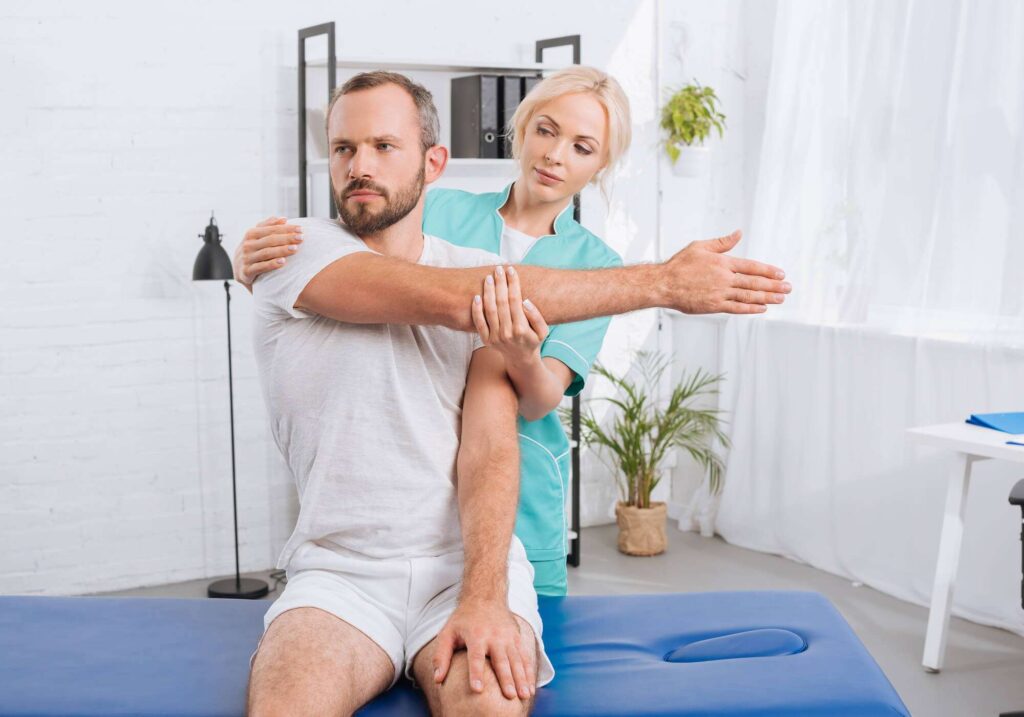
A lot of knee pain treatment out there amounts to symptom management dressed up as a solution. Pain pills quiet the signal without touching the underlying wear or injury. Generic exercise plans handed out without an actual diagnosis sometimes help and sometimes make things worse. Our goal isn’t to keep you comfortable indefinitely. It’s to figure out what’s actually damaged and treat that directly, so you’re not booking the same appointment again in six months for the same unresolved problem.
In most cases, yes. A physical exam combined with imaging such as an MRI or ultrasound usually distinguishes between the two clearly. Surgery is rarely needed just for diagnosis, though it may become part of the treatment discussion depending on findings.
Yes, and it’s a useful clue rather than a red flag. Shifting pain locations often point toward tracking issues or compensatory movement patterns, which a hands-on exam can usually pinpoint faster than imaging alone.
There’s no universal number, but repeated injections without lasting relief usually signal it’s time to reassess the underlying cause rather than repeat the same treatment. Most specialists reevaluate after two to three injections show diminishing results.
It genuinely helps, since every extra pound adds measurable load to the joint with each step, but it rarely resolves structural issues like a torn meniscus or advanced arthritis on its own. It works best alongside targeted treatment, not instead of it.
Often, yes. Untreated or partially healed injuries can alter how the knee moves for years afterward, leading to compensatory wear that eventually becomes painful on its own, even in a different part of the joint than the original injury.
If you’ve been told to rest, ice, and wait it out one too many times, Sekiwala Pain Management Center offers a different starting point, one built around Dr. Kulubya’s specialized training and a genuine diagnostic process rather than a generic treatment script. Call 714-234-7485 to schedule an evaluation and finally get a straight answer about what’s going on in your knee.
Knee pain does not have to control your movement or limit your lifestyle. At Sekiwala Pain Management Center, we are committed to delivering focused, compassionate care that helps patients regain comfort and confidence.
Call Us: +1 714-701-1071
Email: eskulubya@gmail.com
Schedule a consultation and take the next step toward effective, personalized knee pain relief.

©2026 Sekiwala Pain Management Center. All rights reserved. Powered by Design Hub Solution